Latin influence on the English language

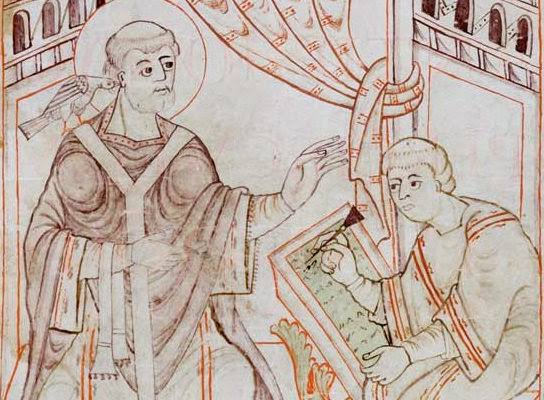
A very important phase of Latin influence on English was opened up by conversion of England to Christianity . The period of influence may be said to start from 597 AD with the conversion of Kent and lasted throughout the old English period . The Christian monks were the only literate people in this time and they gave the people of England a modicum of Latin education .
It has been estimated that as a result of the Christianisation of Britain some 450 Latin words appear in English writing before the end of the Old English period , without counting the various derivatives and compounds made from the words . Religious words ( abbot , altar , angel , nun , pope , priest , prophet , Sabbath , synagogue , etc ), Medical terms like Cancer , paralysis , plaster , animal names like camel , tiger , scorpion , etc , all have Latin roots . Listing all of the words would take an ungodly amount of time and so , cutting to the point , Latin words were influencing the Anglo Saxons .

Furthermore , in the renaissance , Latin and English were so closely blended that distinct Latin suffixes like ‘ – ment ‘ and ‘ – ation ‘ were transplanted to native words , some examples being acknowledgement , amazement , measurement , starvation , after , etc . The zeal for classical learning led scholars in the renaissance period to even reshape words derived from French back to their original Latin models . The love for Latin also resulted in words coming back which had already entered English through the French occupation like blame – blaspheme , chapter – capital , poor – pauper , etc .
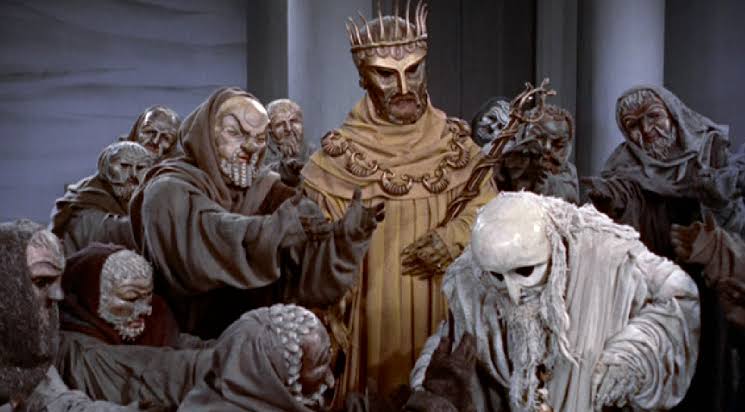
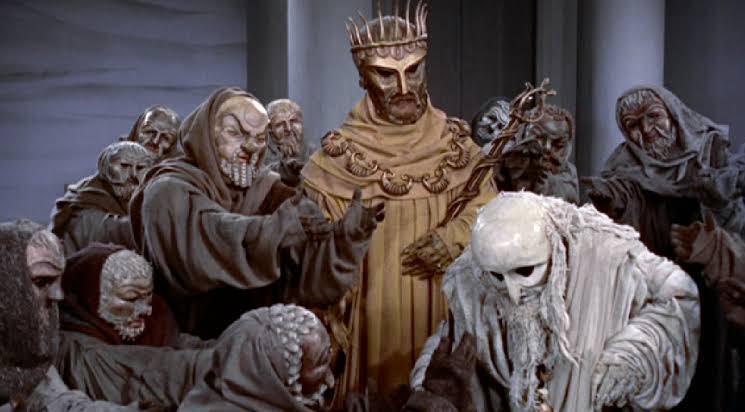
Oedipus’ anger against Tiresias

After solving the riddle of the Sphinx , Oedipus becomes the king of Thebes and as he ascends to the throne he is confronted with the fact that his kingdom is being devastated by plague. He tries to know the reason behind the plague very earnestly . He sends his confidant Creon to the temple of Apollo to know the truth.

Tiresias

When Creon returns from the temple he tells Oedipus that the murderer of Laius is the reason behind the plague and if Oedipus fails to detect him then the whole city will gradually die .

Having tried everything , Oedipus finally calls for Tiresias , the blind prophet to investigate the matter and to get to know the whereabouts of the murderer . This whole part is about Tiresias foreshadowing and throwing in small hints such as saying

” How terrible – to see the truth

When the truth is only pain to him who sees ! ”

This , not surprisingly makes Oedipus more and more frustrated . As we see Oedipus’ slow decline , we the audience know what Tiresias already does . As he is repeatedly questioned again , he says

” You are the curse , the corruption of the land ”

This was the last straw , Oedipus gets angry and curses at Tiresias. Coming up with conspiracies as he cannot believe him . As the play comes to the climax , Tiresias castigates him by saying :

” You’ve lost your power ,

Stone-blind, stone-deaf- senses , eyes blind as stone ! ”

Epic foreshadowing much ?!?!

Oedipus’ anger seems justified however , he wouldn’t have knowingly committed the crimes that he has . His only crime being trying to run away from fate , but wouldn’t you want to do the same if you were put into his shoes ? That is the question we leave you with .

Plot construction in Oedipus Rex – a classic use of the Freytag’s pyramid

The plot of Oedipus the king is so remarkable that the drama has been called one of the most perfect dramas in terms of plot construction . Aristotle , in his book Poetics , says ; plot is the most important factor of a tragedy . This play depicts the story of a king who is brought down by unforseen consequences of his own path . Each incident in the play is a part of a tightly constructed cause-and-effect chain , which successfully fulfills the requirements for the ‘ unity of action ‘ of the play .

Oedipus and Jocasta

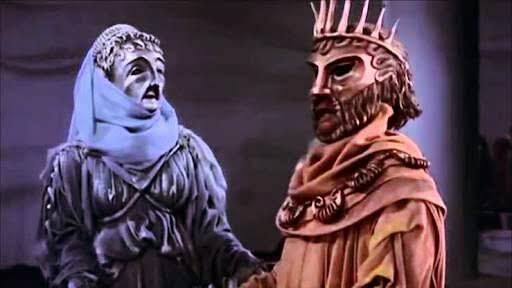
The play follows a narrative summed up by the German novelist Gustav Freytag in his pyramid . In the ‘ exposition ‘ part we get to see the pathetic condition of the people of Thebes and Oedipus’ adamant wish to save his city from the grasp of the deadly plague . The exposition is followed by the second important factor , that is the ‘ rise in action ‘ . The confrontation between Oedipus and Creon , the intervention and persuasion by Jocasta and the dialogue between the King and the Queen can be found under this segment . The ‘ climax ‘ of the play shows the real identity of Oedipus . In this portion all the questions raised in the previous act find a fitting solution . In the last segment , that is , the ‘ Denouement ‘ we get to see how the Queen commits suicide and Oedipus , devastated , blinds himself .

Freytag’s pyramid

Again one can feel the presence of a closely knit structure of a tragedy in this play . The presence of a condensed and compact plot without any digression is also an important factor of this tragedy .

Catastrophe – a brief summary

The ultimate stage in the plot of a tragic play is the Catastrophe . It is the culmination of a dramatic story reaching its finale and ending with a dramatic conflict .

After all suspense and uncertainty the action of the play reaches the inevitable end in which the protagonist succumbs to the dark forces of tragedy . The dramatic story which has long been developed in different directions , now nears it’s conclusion . Diverse elements in the plot are brought together and all the loose ends are tied .

The catastrophe occurs in the end of the play – in the last act or generally in the last scene . Of course the exact demarcation of it’s structural position is not always possible due to the sheer volume and diversity among the plays . The whole matter rests rather on the characters of the play and its structure . Thus , in classical plays generally the Catastrophe is reported at the end of the play by a messenger .

In Elizabethan playwrights such as Christopher Marlowe , we find some exceptions such as in Edward II , the Catastrophe occurs in the middle of Act V . But more often than not , most plays ( including Shakespearean ones like Julius Caesar , Macbeth or King Lear ) it comes in the concluding scene , providing a necessary dose of Catharsis .

Thank you for reading , check out more of our summaries here : –

French words in English ( the Norman invasion)

The Norman conquest of 1066 had wide and far reaching consequences to England , some of which we still face to this day . Both the language and the literature had major changes done to them , French words came into contact with the English ones and the language was never the same anymore .

William the Conqueror

The Normans became the rulers of the conquered land and words related power , administration and politics like state , government , people , realm and parliament were borrowed .

Feudalism was brought to England by the Normans and words like prince , peer , court , courteous , honour , glory and heraldry also have french origin .

The military strength of the Normans was noteworthy as well and words like war , peace , battle , army and navy also have french roots .

Battle of Hastings

The Normans considered themselves superior to the Anglo Saxon population of England and hence words like Master , Mistress , Sir , Madam and command are … You guessed it , French ! Words pertaining to moral virtues like pity , vice , jealous , virtue and cruel also come from French .

The Normans were also very particular about their food and ways of eating and hence words like boil , toast , sauce , jelly and fry that pertain to methods of cooking entered English . Names of animals remained the same but when cooked and dressed for the nobles , cow was beef , sheep was mutton , swine was pork , deer was venison and pig became bacon .

Being the artistic folks that they are , the French couldn’t resist but influence the fashion of their time and hence words like dress , costume , garment , fashion and luxury are of French origin .

Being fond of art and architecture , several French words were frequented and hence have french roots such as arch , pillar , castle , palace and tower . Other words relating to various kinds of artisans also entered English like tailor , carpenter , butcher , mason and painter .

Do you know more words that are used frequently in English but are French in origin ? Drop them in the comments below ! We would love to hear from you folks out there . Follow us for more posts about literature and history and if you liked what you saw you can check out our other posts here !

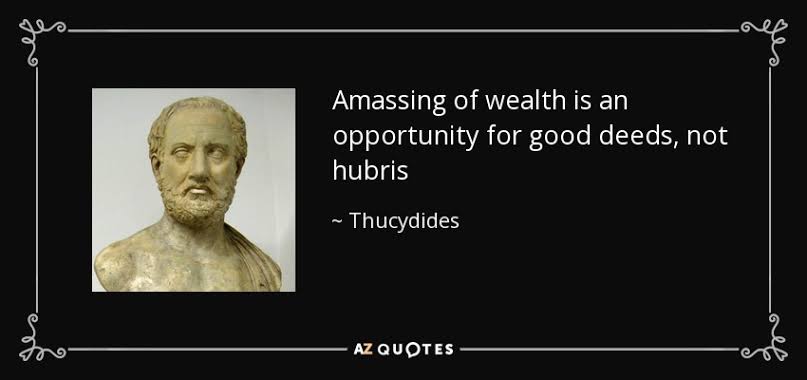
Hubris and it’s relation to Oedipus

The Greek term hubris signifies ‘ pride ‘ a sort of insolence as well as an egoistic sense of vanity about one’s personal ability or security .

The question of hubris is implied in Aristotle’s contention about the error of judgement , or what is called hamartia . Which we have discussed in the previous article which you can see here .

Pride for one’s dignity or heroic quality is no crime , but it’s definitely an infirmity , when it grows excessively and defies all regulations . This then pre supposes a fall and the effect of the hamartia becomes operative . Hubris , indeed , is related to hamartia and is a strong element in the operation of the latter .

Hubris in Oedipus Rex

Sophocles’s protagonist in his drama , Oedipus Rex ( King Oedipus ) is defiantly insolent and has a strong ego about his own purity which he declares with pride . This however , proves fatal for him as he brings upon himself the impact of the blemishes that he commited earlier ignorantly . In the play Oedipus was almost on the verge of tyranny , having been used to undivided authority . He became a victim of his own hubris as he lost all self control and was inclined to hasty inferences . As the truth was unravelled to him bit by bit we can see his slow decline to insanity . And as the messenger comes in and provides the ‘ nail in the coffin ‘ , Oedipus looses everything he ever held dear , his wife , his offsprings , his subjects and his throne . Blinded not only metaphorically but also literally at this point , the audience can sympathize and hence , this provides Catharsis for the audience .

Hamartia – a brief summary


The best tragic action , in Aristotle’s viewpoint concieves a change in fortune not from misery to prosperity , but the opposite . This change is due to the error of humans in their actions . In chapter 13 of Poetics , Aristotle further enunciates wherefrom the tragic suffering ensues and the nature of the tragic emotions of pity and fear .

” There remains then , the intermediate kind of personage , a man not preeminently virtuous and just , who’s misfortune , however , is brought upon him not by vice and depravity , but by some error of judgement , of the number of those in the enjoyment of great reputation and prosperity , that is , Oedipus , Thyestes and men of note of similar families ”

Bywater’s rendering
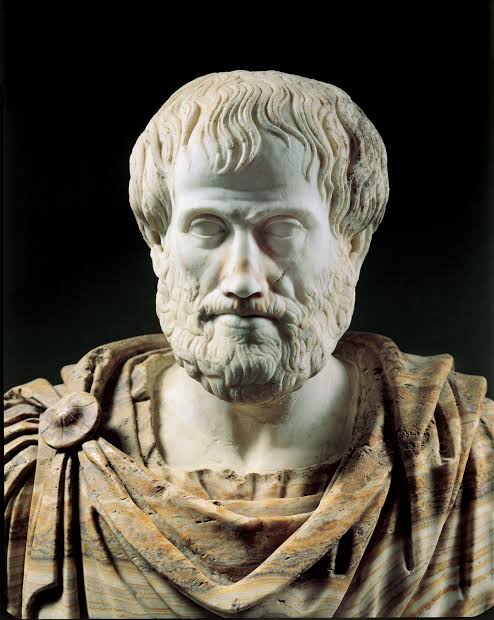
Aristotle

This is taken as a tragic flaw , instrumental to human misfortune and suffering , the degree of which may vary from age to age , from character to character . Errors , missteps , flaws and frailties all lead to the ultimate downfall .

Shakespeare’s arrival in the English sonnet scene

The history of the Sonnet form

The Sonnet as a literary form developed through the thirteenth and the fourteenth century in Italy with the help of Sonneteers such as Giacomo da Lentini , Guittone d’Arezzo , Dante , Cavelcanti and most importantly Petrarch . It also grew popular in France before it was brought to England and modified by Thomas Wyatt and the Earl of Surrey , Henry Howard in the Sixteenth century . Wyatt and Howard , though started off by translating Petrarch’s works , soon remodelled the metrical form of the Petrarchan Sonnet to suit the rhythmic structure of the English language . Unlike the Petrarchan sonnets , consisting of an octave ( eight lines rhyming as abba-abba ) and a sestet ( six lines rhyming as cde-cde ) the English sonnets started having three quatrains and a couplet ( usually rhyming as abab-cdcd-efef-gg ) .

Dante Alighieri

The arrival of Shakespeare

The man himself

The English sonnet form was already nourished by poets like Sir Phillip Sidney , Edmund Spenser and Micheal Drayton when Shakespeare arrived in the literary scene and Sonneteers such as Samuel Daniel and Fulke Greville were his contemporaries . Even then , for the posterity the English sonnet form is usually known as the Shakespearean sonnet and with good reason because it is with the creative and imaginative touch of Shakespeare that the English sonnet form materialized to it’s full potential . Following the Petrarchan tradition , Shakespeare’s sonnets deal with a beloved as the source of inspiration , but unlike Sir Phillip Sidney who called his art a mere copy of the beauty of the beloved , Shakespeare claimed that his poetry added perfection to the natural beauty of the beloved .

” For to thy sensual fault I bring in sense

Thy adverse party is thy advocate ”

Most other Elizabethan sonnet cycles deal with a theme without further growth . But the Shakespearean sonnet cycle registers the progressive qualities of a narrative . Shakespeare’s art as a dramatist influences his skills as a Sonneteer as he builds his characters ( for example : the lover and the ” dark lady ” ) , who grow across the span of 154 sonnets . Also by making a largely homoerotic bonding between two men in the axis of his sonnet cycle , he creates a unique precedence . He also overturns the convention of Petrarchan conceits that standardized certain terms of comparison in sonnets such as sonnet 130

” My mistress’s eyes are nothing like the sun

Coral is far more red than her lips red ”

Conclusion

With Shakespeare the English sonnet form achieved its full dramatic potential with the couplet often giving it a symmetrical effect . He brought different hues to the highly conventional format of the Sonnet . His witty puns and the sense of irony along with a complex view of love , art and life brought multiple layers of meaning within the economy of fourteen lines .

Catharsis – a brief overview

Catharsis , as defined by Aristotle is an element of the emotional effect of tragedy . He says that the action of the tragedy has a healthy impact on the mind and arouses pity and fear simultaneously to accomplish the catharsis of such emotions . Thus catharsis can be chalked up to be the process of releasing strong or repressed emotions and thereby providing a moral and spiritual renewal for an individual .

A Greek play

It was used in Aristotle’s poetics as a metaphor to explain the impact of tragedy to the audiences . He further elaborated in Poetics saying : –

” Tragedy is an imitation of an action that is serious , complete and of a certain magnitude “

The implication being that a tragic action , as it is represented , liberates the mind of a spectator from the selfish narrowness of his / her mundane existence and elevates him to a state of liberation from anxiety or stress . It has a significant moral purpose of purging the mind with the elements of pity and fear .

It is also a medical term indicating internal cleansing by means of an aesthetic purgative , just as there may be physical cleansing by means of the material purgative . What Aristotle contends is that the tragic action has a moral effect on the mind of the spectator and cleanses it from all that is selfish and evil . Thus , a spontaneous effect of pity and fear is achieved . To Plato , catharsis was a much wider term marking the soul’s ascent to knowledge by going beyond the fixed senses and embracing knowledge in the most pure form . To him cathartic virtues were a way of assimilation to divinity . As they separated the soul from the sensible , from everything that is unnecessary and untrue . Therefore paving the way for it to contemplate the mind .

Examples of Cathartic relief are littered throughout plays dating as far back as Oedipus Rex to Shakespeare’s plays like Julius Caesar and Romeo and Juliet and even in various recent plays , although admittedly they are very scarce . However , the world still continues to debate the necessity of Catharsis in drama .

Design a site like this with WordPress.com
Get started